
How Cotton Kantha Rugs Are Made: Inside the Traditional Indian Rug Manufacturing Process
A cotton Kantha rugs may look simple at first glance, but its character comes from a surprisingly hands-on process. Unlike factory-made floor coverings that are produced mainly by machines, Cotton Kantha Rugs are built through layers of cotton fabric and rows of hand stitching.
The technique is closely associated with the Indian tradition of Kantha embroidery, where running stitches have historically been used to join and decorate layers of cloth. When this idea is adapted into a rug, the result is a soft, textured textile with a distinctly handmade appearance.
So, how does a pile of cotton fabric become a finished rug? Let’s look inside the process.
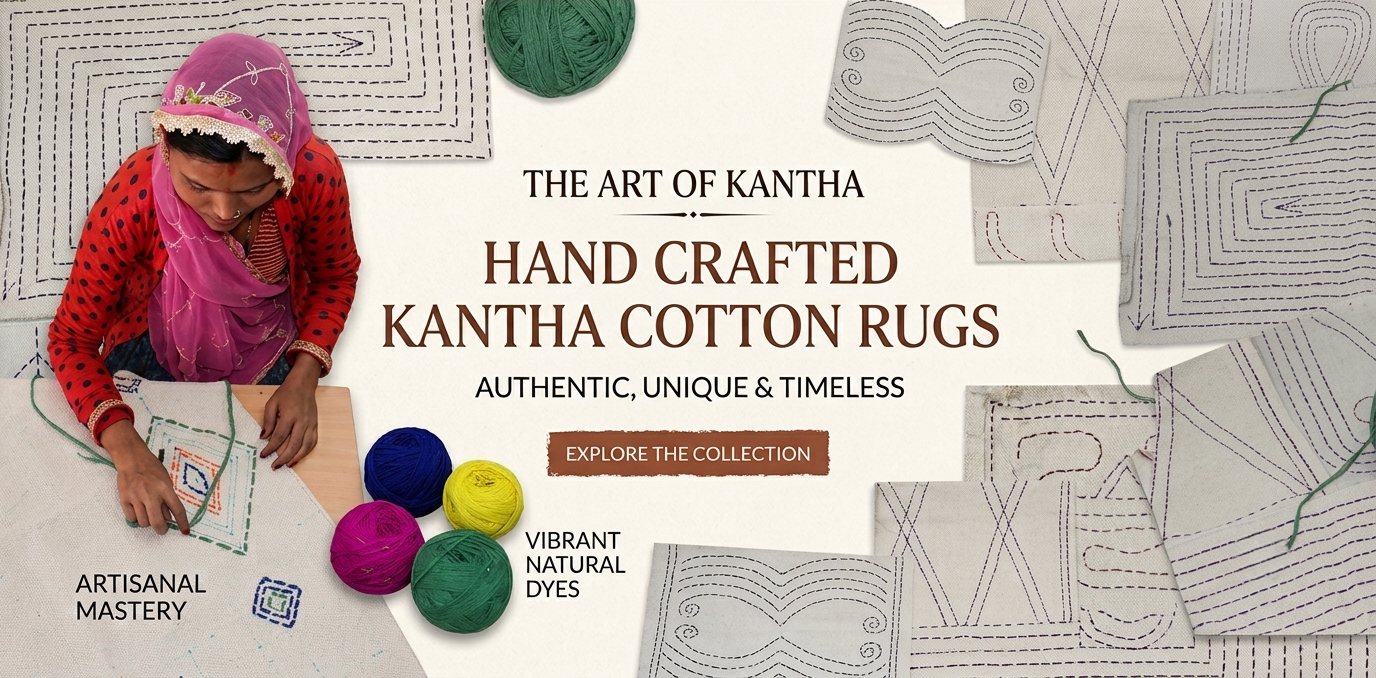
Selecting and Preparing Cotton Fabric
The manufacturing process begins with suitable cotton textiles. Depending on the intended design, makers select fabrics for their weight, weave, color, and overall condition.
The fabric is then cleaned and prepared before production. Several layers may be arranged together to create the desired thickness and body.
This stage matters more than it might seem. If the layers aren't properly aligned, the finished rug can develop uneven edges or an inconsistent surface.
Layering the Fabric for a Cotton Kantha Rugs
The defining feature of a Cotton Kantha rugs is its layered construction.
Instead of creating a thick pile, artisans place cotton fabrics over one another and secure them with stitching. The number of layers can vary according to the desired weight, thickness, and use of the rug.
Once the layers are positioned, the edges are carefully aligned. Some designs use contrasting fabrics, while others create a more restrained appearance with similar tones.
This layered approach gives Kantha rugs their characteristic soft, slightly quilted texture.

The Handmade Kantha Stitching Process
Here's where the personality of the rug really develops.
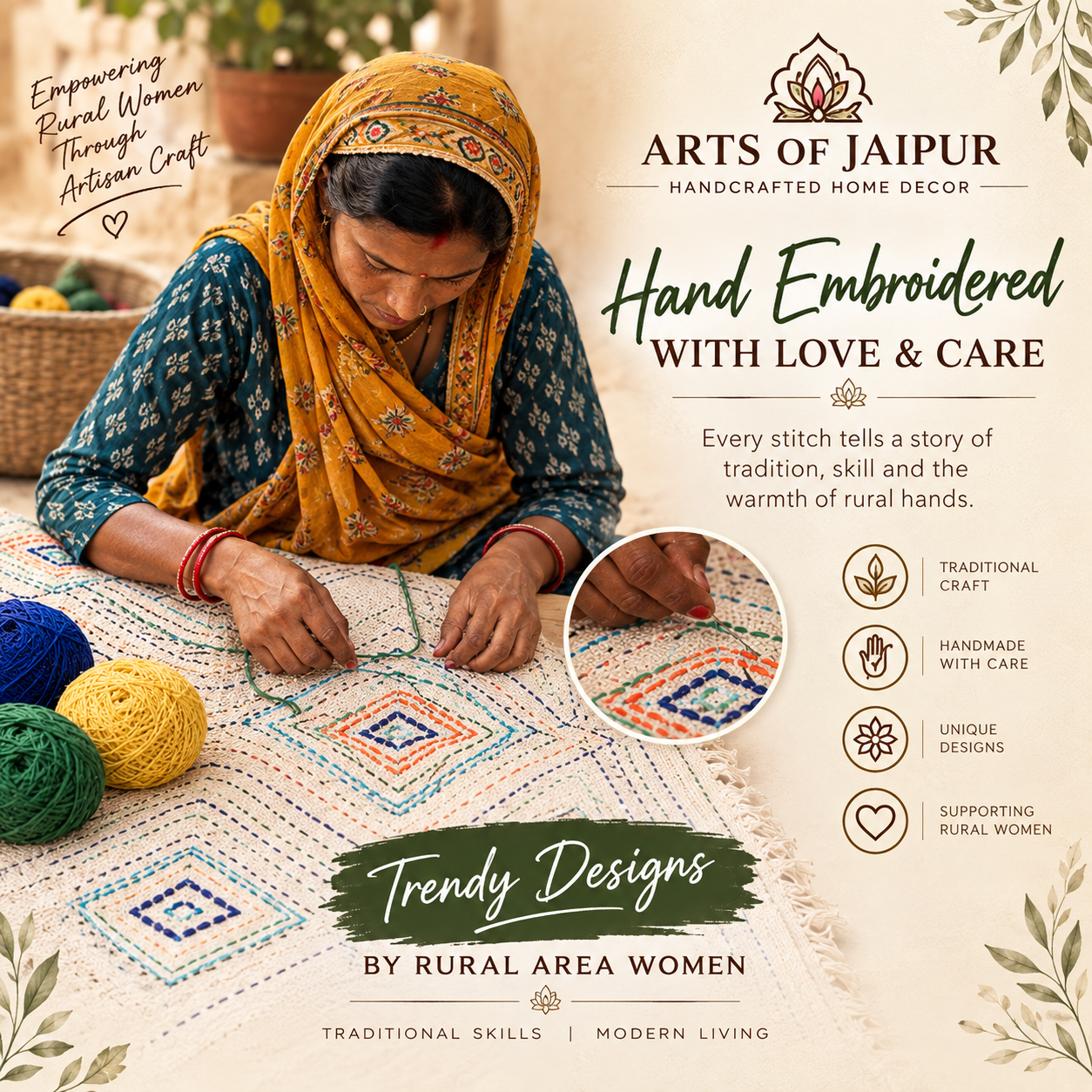
Artisans use running stitches to hold the fabric layers together. The needle passes repeatedly through the layers, creating rows of small stitches across the surface.
Depending on the design, stitching may follow straight lines, grids, geometric arrangements, Floral or more organic patterns. The stitches don't simply hold the rug together, they become part of its visual character.
This is also why handmade Kantha rugs aren't perfectly identical. Small variations in stitch spacing, tension, and fabric placement are natural signs of hand craftsmanship rather than manufacturing defects.
Creating Patterns and Color Combinations
After the basic structure is secured, artisans develop the visual arrangement of the rug.
Some pieces have subtle linear patterns, while others feature stronger geometric compositions. Color can range from natural and muted shades to expressive combinations such as orange cotton rugs and blue cotton rugs.
Kantha construction can also inspire contemporary modern cotton rugs, geometric cotton rugs, and traditional cotton rugs without losing the underlying handmade technique.
Cutting, Shaping, and Finishing
Once stitching is complete, the rug is inspected and finished. Loose threads are trimmed, edges are checked, and the surface is examined for construction consistency.
Edges are particularly important. They need to be finished securely so the fabric doesn't begin separating during normal use.
The final product is generally flatter and more flexible than a conventional high-pile rug, making it suitable for bedrooms, living spaces, hallways, and other areas where a soft textile surface is desirable.
Washing and Final Inspection
Before reaching the final stage, cotton rugs may undergo cleaning or washing depending on their construction and manufacturing method. This can help remove loose fibers, dust, or residues from production.
The final inspection checks several practical details:
- Overall dimensions and shape
- Stitching security
- Edge finishing
- Surface appearance
- Loose threads or damaged areas
- General cleanliness
This step matters more than people sometimes realize. A beautiful textile isn't much use as a rug if the edges or stitching aren't properly finished.
How Kantha Rugs Differ From Other Cotton Rugs
Not every cotton rug is made using the same technique.
For example, hand block printed cotton rugs receive their visual patterns through carved blocks and textile printing, while cotton braided rugs are constructed by braiding strips of fabric. Cotton throw rugs may be smaller decorative textiles, and runner cotton rugs are designed around long, narrow spaces.
A 5x8 cotton rug, meanwhile, describes its size, not necessarily its manufacturing method.
That's an important distinction when comparing cotton rugs: construction, decoration, and dimensions are three different things.
Caring for a Cotton Kantha Rug
Because cotton is generally easier to handle than many heavier rug materials, maintenance can be straightforward. Still, always follow the specific care instructions supplied with the rug.
For everyday care:
- Vacuum gently using an appropriate setting.
- Shake or air the rug outdoors when practical.
- Treat spills quickly rather than allowing them to settle.
- Avoid harsh chemicals unless the manufacturer specifically recommends them.
- Make sure the rug is completely dry after washing.
Color also matters.strongly colored textiles can respond differently to sunlight, washing, and cleaning products.
What Makes Handmade Kantha Rugs Special?
The biggest difference is the human element.
A machine can reproduce a pattern with remarkable consistency, but hand stitching naturally introduces tiny variations. Those variations give the rug a tactile quality and a sense of individuality.
The technique also makes good use of layered cotton textiles, turning simple fabric into a functional household textile through careful stitching.
FAQs
- What is a Cotton Kantha Rug?
A Cotton Kantha Rug is a textile rug made from layers of cotton fabric that are secured together using traditional Kantha-style hand stitching, typically based on running stitches.
- Are Kantha rugs handmade?
Yes. Traditional Kantha construction relies heavily on hand stitching. Minor variations in stitching and surface texture are therefore normal in genuinely handmade pieces.
- Are Kantha rugs thick?
Kantha rugs are generally relatively flat compared with high-pile rugs. Their thickness depends on the number of fabric layers and the stitching and finishing techniques used.
- Can Kantha rugs have modern designs?
Absolutely. Although Kantha is rooted in a traditional Indian textile technique, the construction can be used with contemporary colors, geometric patterns, minimalist designs, and modern interior styles.
- What makes Cotton Kantha Rugs different from other cotton rugs?
The biggest difference is the hand-stitched construction and visible Kantha detailing. While hand block printed cotton rugs rely primarily on printed patterns and other cotton rugs may be woven or braided, Kantha rugs use layered fabric and stitching to create their distinctive texture and handmade character.
A Craft That Still Feels Personal
The beauty of a Kantha rug isn't really about making every stitch identical. It's about transforming ordinary cotton fabric through patience, layering, and thousands of small movements of a needle.
That handmade process is what gives each rug its subtle character. Whether the final design is traditional, geometric, colorful, or wonderfully simple, the story remains the same: cotton fabric, careful hands, and the humble running stitch working together to create something meant to last.